Leave yourself room to season at the end
Seasoning early can shape a dish, but the final taste depends on everything added and removed afterward.
Seasoning early can shape a dish, but the final taste depends on everything added and removed afterward. Keep some room to adjust when the whole meal is nearly ready.
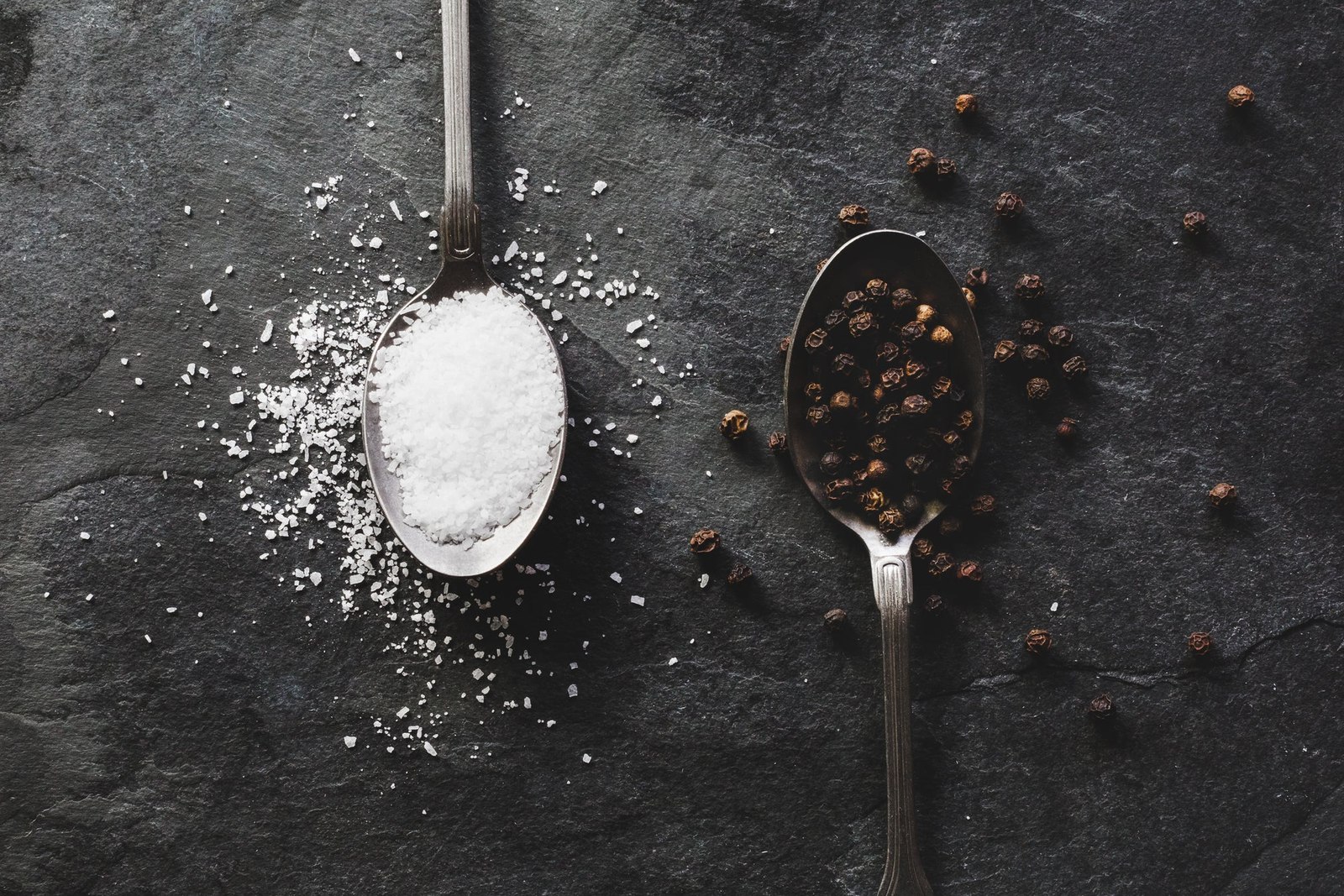
A pot that will reduce needs a different approach from vegetables cooked briefly and served immediately. Stock, cheese, preserved ingredients and sauces can all bring seasoning of their own. Before adding a large pinch of salt, identify which of those ingredients is still to come. Use a clean tasting spoon and cool the sample enough to taste comfortably.
Taste the assembled mouthful
Try a small bite with the grain, vegetable and sauce together. A strongly seasoned sauce may be intended to accompany plain rice; tasting it alone can mislead you. Conversely, a bland base may need seasoning in its own right rather than a stronger topping.
Keep additions small enough that you can notice their effect. If the flavour seems dull, compare a spoonful with a little acid and another with a little salt instead of adding both blindly to the pot. An oversalted dish may need an unsalted component or a smaller serving with a plain accompaniment. There is no single pantry trick that reliably removes salt. The easier habit is leaving yourself an adjustment at the end.